
Thblet Q&A
Q & A for Customers & Patients
How to take Thblet, which product suits what, and what to expect: plain answers for the people who use it.
20 questions
Taking Thblet: Choosing, Dosing and What to Expect
Select a question to read the answer. Anything we have not covered, send us a message and a Thblet representative will reply.
01Will taking Thblet Day products make me drowsy or impair my driving?
Day products are formulated for daytime use, but individual responses vary and the label warns that Thblet may cause drowsiness and impaired concentration. See how it affects you first, and do not drive or operate machinery if you feel drowsy, dizzy or less able to concentrate.
02How quickly will I feel relief after taking a Thblet?
Thblet uses a nano-emulsion designed to help your body absorb it more consistently than traditional oils. How quickly you notice an effect varies from person to person.
03How do I take my Thblet?
Simply swallow 1 tablet with water according to the pack directions: 1 in the morning for Day products, or 1 before bedtime for Night products.
04Is Thblet addictive or habit-forming if used daily?
Use Thblet only as directed on the pack. The risk of dependence depends on the ingredients and dose, so speak to your pharmacist or doctor if you feel you need more to get the same effect, or before using it long term.
05How is Thblet different from daily over-the-counter painkillers?
Regular painkillers can irritate your stomach lining and, over time, strain your liver or kidneys. Thblet works differently, through cannabinoids and terpenes, but it can still cause side effects such as drowsiness and can interact with other medicines. Ask your pharmacist or doctor which option suits you.
06Which product should I choose for work stress and constant worrying?
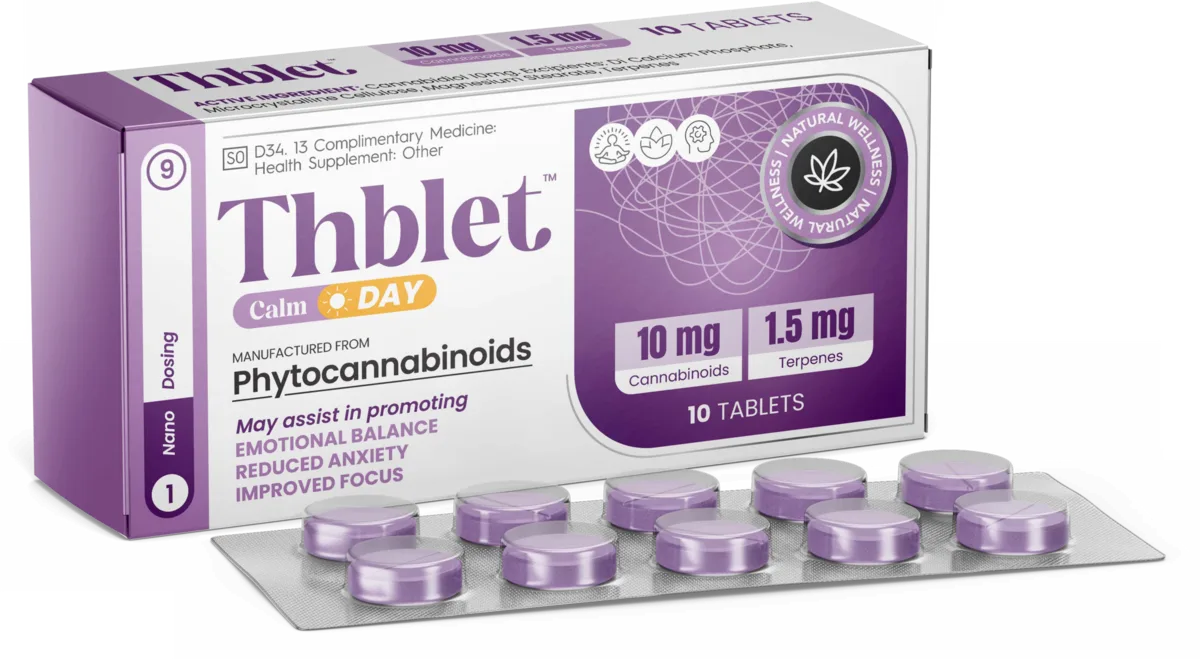
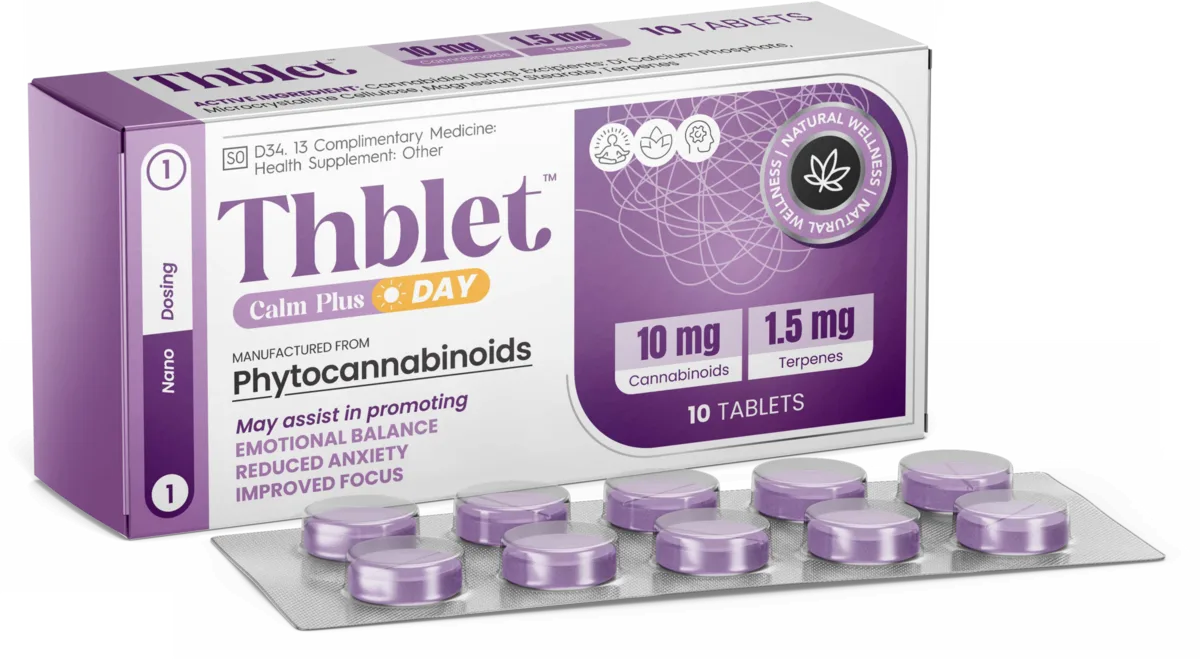
Thblet Calm Day or Calm Plus Day. The label states that the Calm range may assist in promoting emotional balance, reduced anxiety and improved focus.
07Will Thblet SleepAid leave me feeling groggy or hungover the next morning?
SleepAid is taken at bedtime, but some people may still feel drowsy the next morning. See how it affects you before you drive or do anything that needs full concentration.
08Can Thblet help with my joint pain and arthritis stiffness?
The label states that the Thblet Pain range may assist in relieving joint inflammation and chronic arthritis. If joint pain is persistent or getting worse, see your doctor.
09What are terpenes and why are they in my Thblet?
Terpenes are natural aromatic compounds found in plants that work together with cannabinoids to enhance therapeutic benefits, a synergy called the Entourage Effect.
10Where can I purchase the Thblet range?
Thblet is available at participating pharmacies and health clinics, ensuring you receive expert advice alongside your product.
11What is the difference between Thblet Mild Pain and Moderate Pain?
Mild Pain Day provides gentle relief for everyday aches, while Moderate Pain Day is the step up for more persistent joint or muscle discomfort.
12Can I take Thblet Calm Day and Thblet SleepAid Night on the same day?
Yes, they are designed to be used this way: Calm Day in the morning and SleepAid Night before bed. Both may cause drowsiness, so see how they affect you, and ask your pharmacist first if you take other medicines.
13What should I do if I wake up frequently during the night?
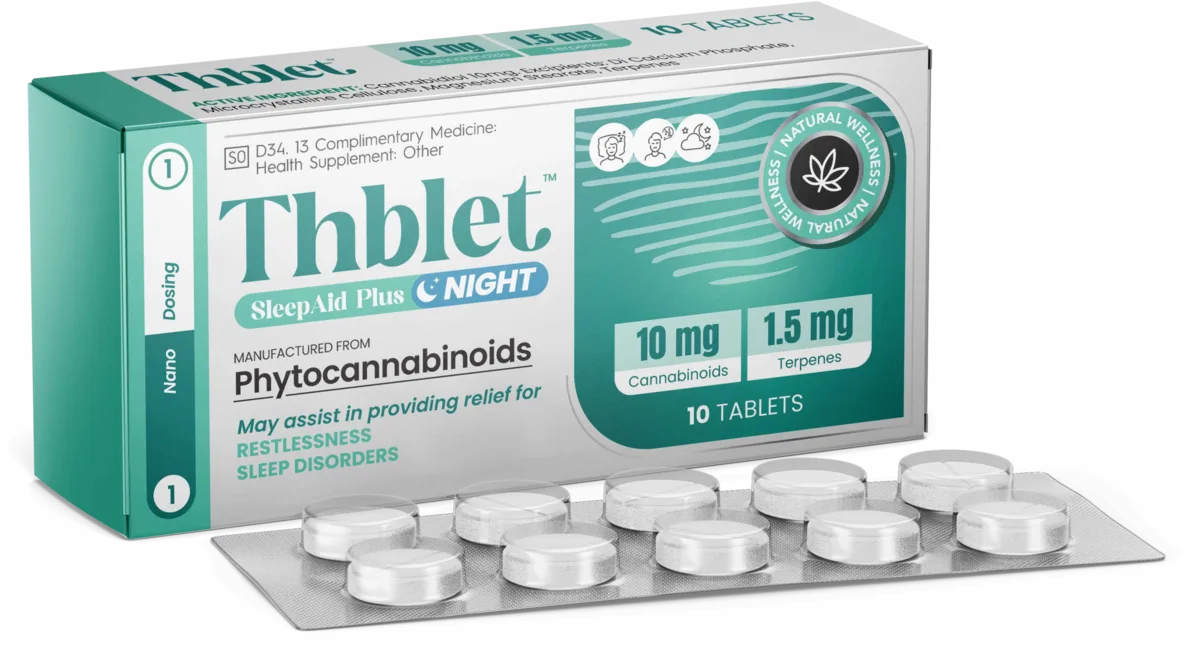
Thblet SleepAid Plus Night is the step up in the Sleep range for frequent night waking. If poor sleep carries on, see your doctor.
14How does Thblet Insomnia Night help with severe sleep issues?
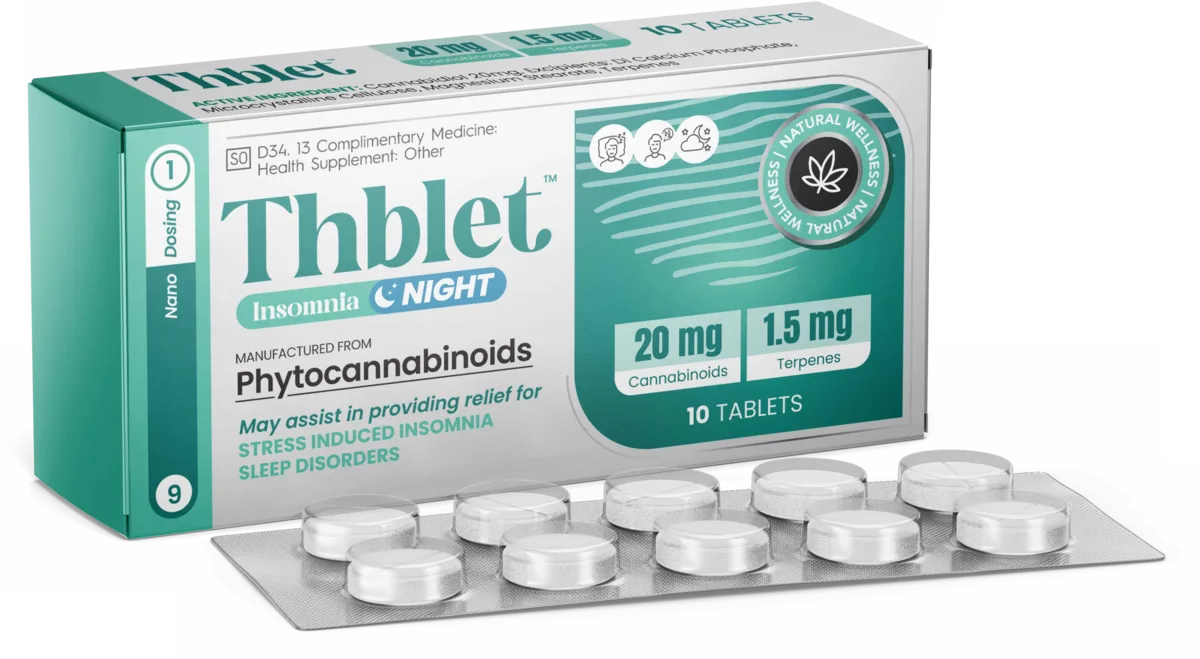
It is the strongest product in the Sleep range at 20 mg, and its label states that it may assist with stress-induced insomnia. If poor sleep carries on, see your doctor.
15What is in Thblet, and can it cause side effects?
Each tablet holds a fixed dose of plant-derived cannabinoids and terpenes; the full ingredient list is on the pack. Like any medicine it can cause side effects: the label warns of drowsiness and impaired concentration. Stop using it and tell your pharmacist or doctor if you have a reaction.
16Why are the tablets packaged in blister packs instead of a bottle?
Individual blister pockets protect every tablet from moisture and air, keeping every dose fresh, hygienic, and precise.
17Can older adults use Thblet for chronic aches?
Speak to your pharmacist or doctor first, especially if you take other medicines. Older adults can be more sensitive to drowsiness and dizziness, and are more likely to take medicines that could interact.
18Do I need to take Thblet with food?
The pack directions are to take it with a glass of water; they do not say it must be taken with food. Ask your pharmacist if you are unsure.
19How does Thblet Chronic Pain Night help me sleep better?
It is the 20 mg night-time product in the Pain range, for pain that is worse at night. It is taken at bedtime, and the label warns that it may cause drowsiness.
20How many tablets come in a standard Thblet pack?
Every standard pack contains 10 precision-dosed tablets, offering a convenient supply for your treatment routine.
How Thblet Works, in Plain Words
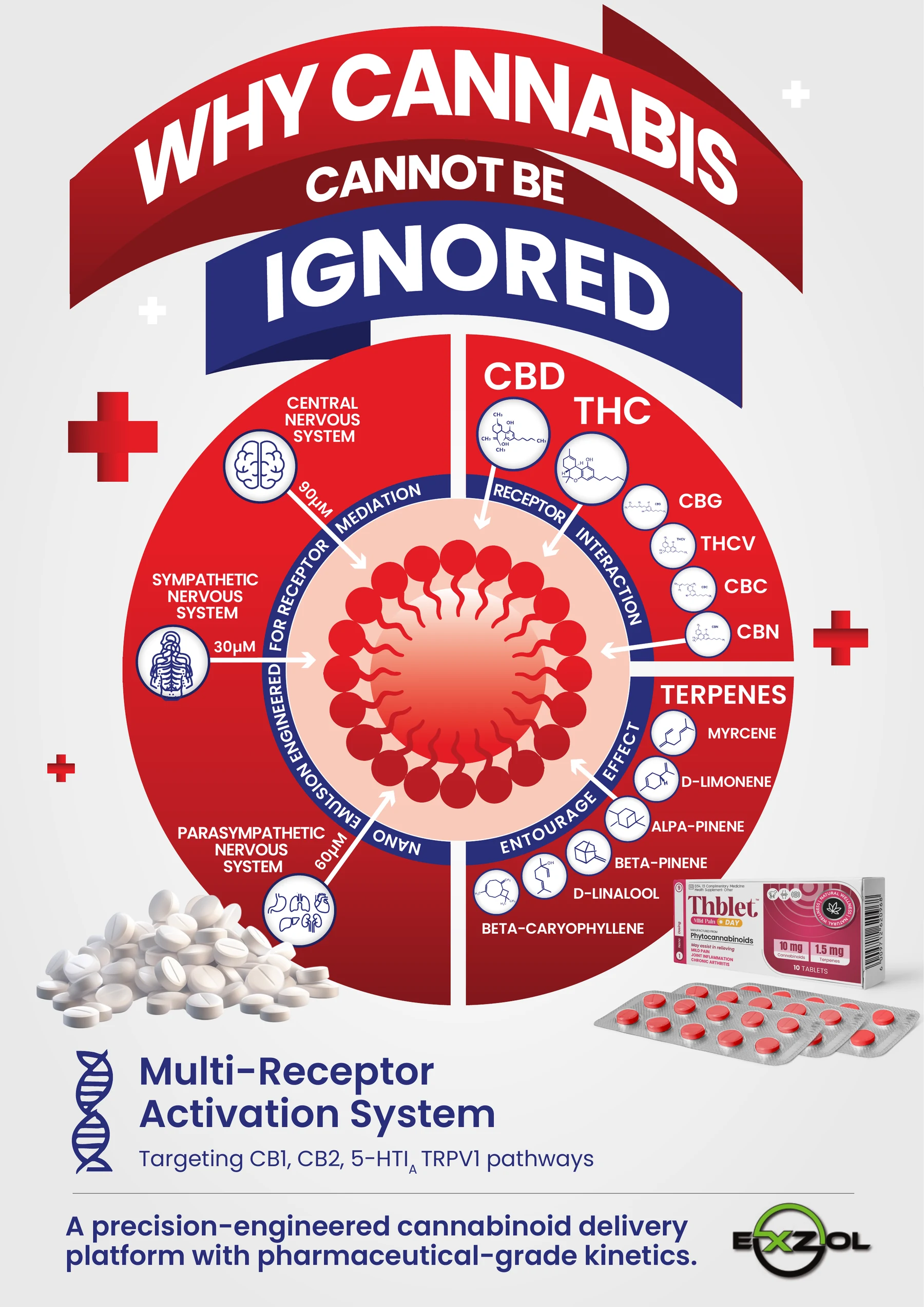
This one page shows the science behind every Thblet. Tap it to see it full size.
- Nano-dosing: designed to help your body absorb Thblet more consistently than traditional oils
- Cannabinoids and terpenes working together: the Entourage Effect
- Available at participating pharmacies, with expert advice alongside your product
Terminology
The medical terms you may hear about Thblet, explained in everyday language.
- 5-HT1A Receptor
- A specific "docking station" in your brain and body that catches serotonin (a natural chemical that affects your mood). When activated, it helps calm anxiety, balance your emotions, and help you cope with stress.
- Allopathic Medicine
- Standard modern medical care: the kind of medicine practised by most doctors and hospitals, using conventional medications and treatments to target specific symptoms or illnesses.
- Analgesic
- A pain reliever (like ibuprofen, paracetamol or aspirin) that reduces physical pain while keeping you awake and alert.
- Anti-Inflammatory
- Something that brings down swelling, redness and stiffness in your body’s tissues or joints, so you feel less sore and move more easily.
- Anxiolytic
- An anti-anxiety medicine or remedy designed to calm your nerves and ease feelings of worry or stress.
- Bioavailability
- The actual amount of a medicine or supplement that enters your bloodstream so your body can use it. For example, if a medicine has low bioavailability, your body discards most of it before it reaches your bloodstream.
- CB1 Receptor
- A sensor found mainly in your brain and spinal cord that responds to natural or plant-based cannabinoids. It helps control mood, memory, movement, and how strongly you feel pain.
- CB2 Receptor
- A sensor located mostly in your immune system and organs outside the brain. It helps manage swelling, immune responses, and pain in the rest of your body.
- Central Nervous System
- Your body’s main control centre, made up of your brain and spinal cord. It processes all information, controls your movements, and processes feelings of pain.
- Endocannabinoid System
- Your body’s internal balancing system. It uses chemical messengers to keep key daily functions, like sleep, mood, hunger, memory and pain levels, running smoothly.
- Entourage Effect
- The "teamwork" effect, where different plant ingredients work better together than any single ingredient on its own.
- First-Pass Metabolism
- The process where your stomach and liver break down a swallowed medicine before it reaches your bloodstream, which often lowers how much of the active ingredient gets through.
- Nano-Emulsion
- A way of breaking oil-based ingredients down into tiny droplets so they mix with water easily, designed to help your body absorb them more consistently.
- Parasympathetic Nervous System
- The "rest-and-digest" part of your nervous system. It slows your heart rate, relaxes your body, and handles digestion after stress passes.
- Pharmacokinetics
- The journey a medicine takes through your body: how it gets absorbed, moves around, gets used, and eventually leaves your system.
- Phytocannabinoids
- Natural compounds found in plants (like CBD or THC) that interact with your body’s internal balancing receptors.
- Sympathetic Nervous System
- The "fight-or-flight" part of your nervous system. It kicks into gear during stress or an emergency, raising your heart rate and energy to handle danger.
- Terpenes
- Natural aromatic oils found in plants that give them their smell and taste (like lavender or citrus) and work alongside other plant ingredients.
- TRPV1 Receptor
- A sensor in your nervous system that detects heat, burning sensations and sudden pain. It is the same sensor triggered when you eat spicy chilli peppers!
Explore the Three Ranges
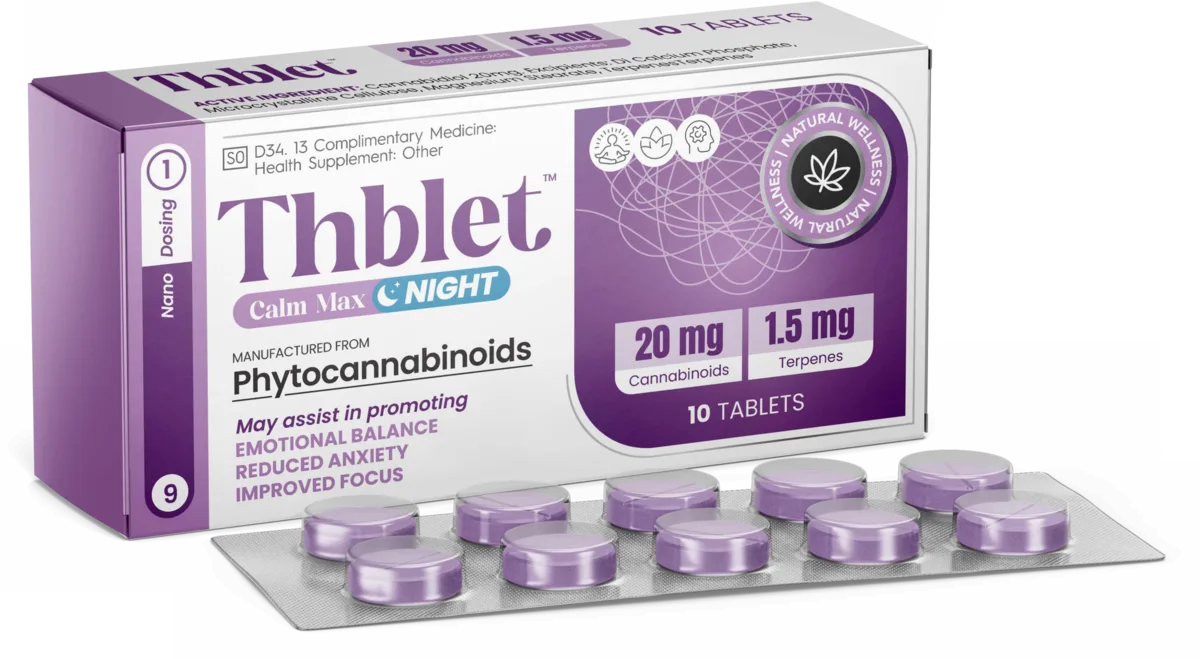
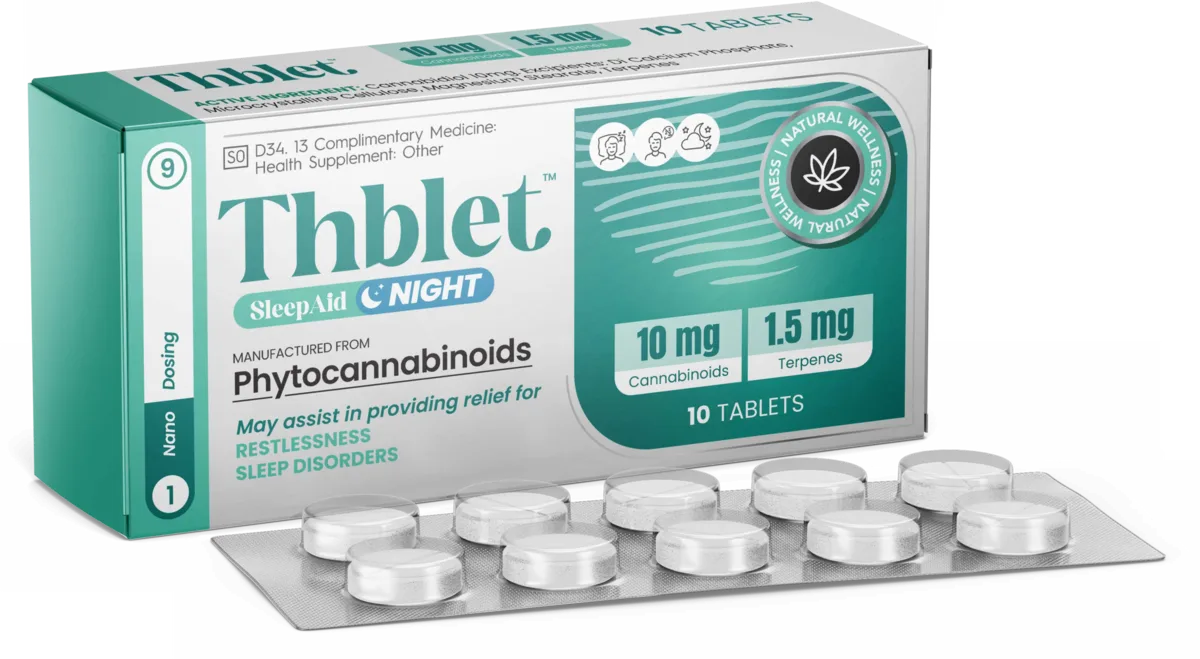
Each range has three products from 10 mg to 20 mg cannabinoids, colour-coded so they are easy to tell apart on the shelf.
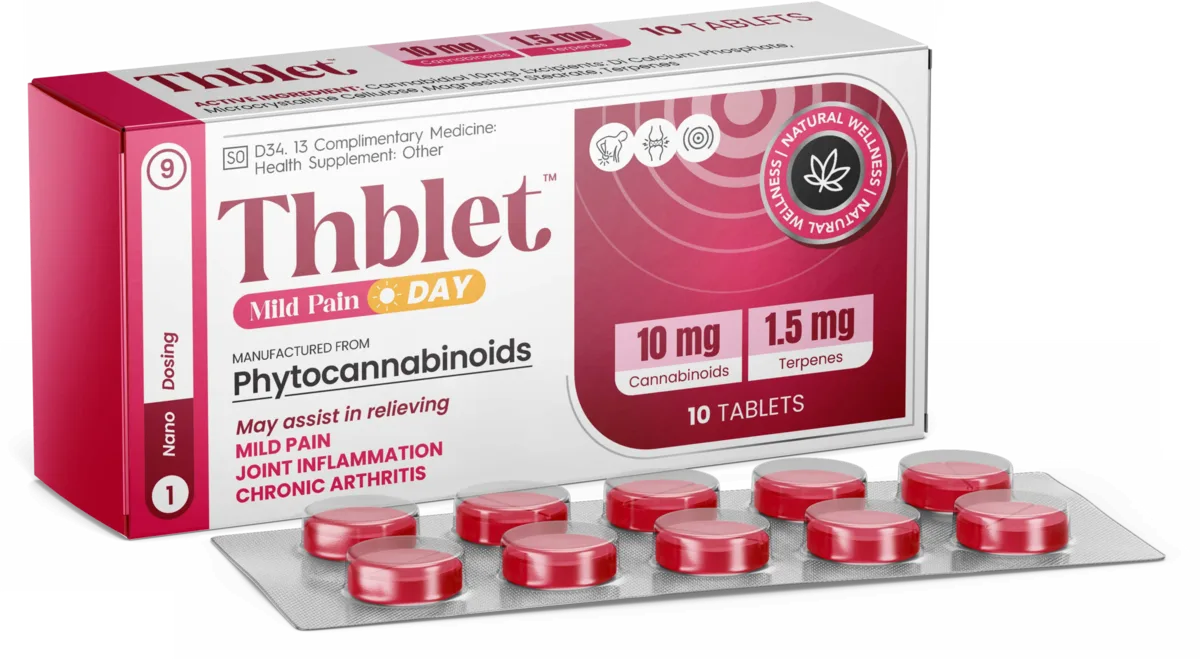
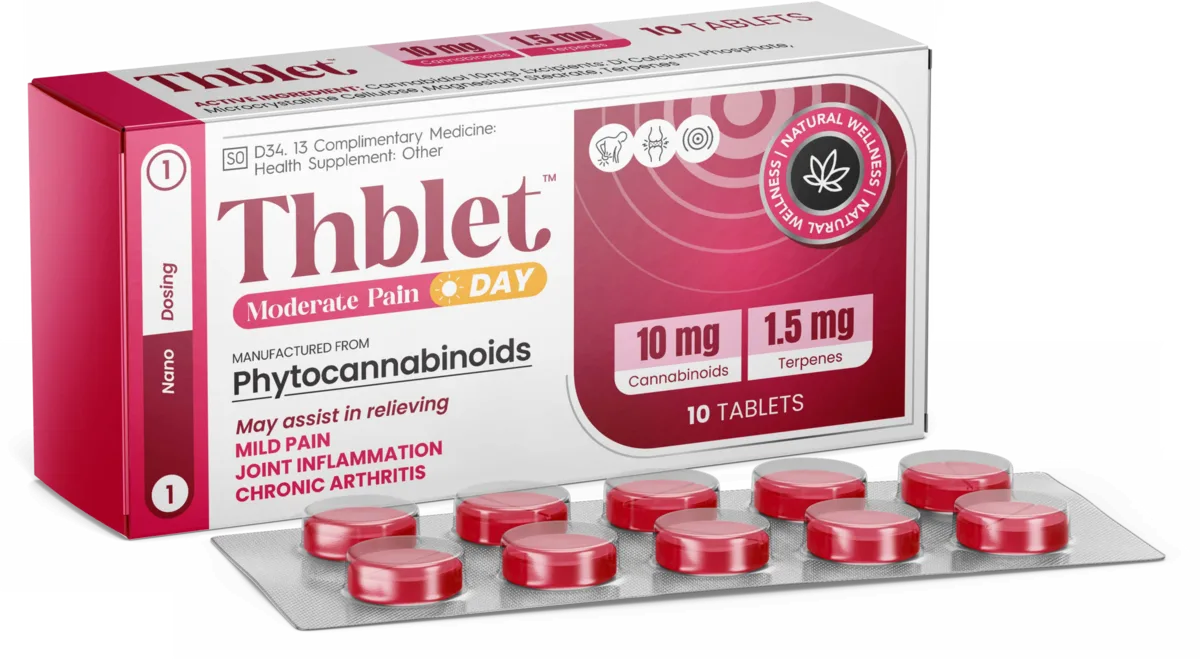
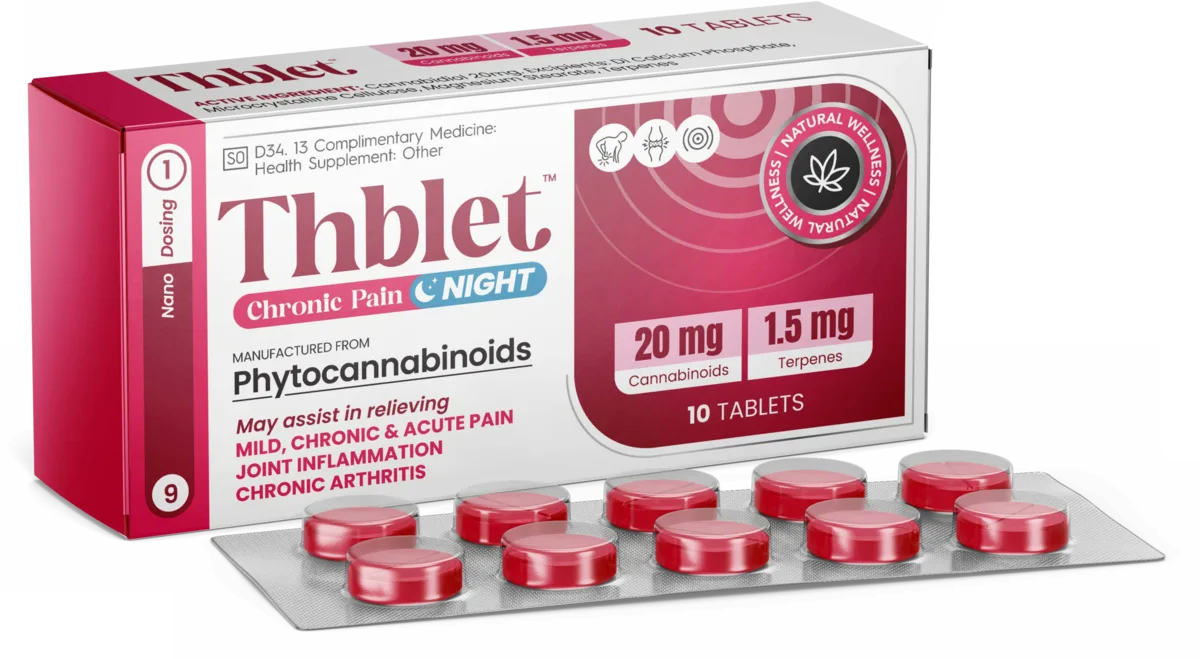
Pain Range
Mild Pain, Moderate Pain and Chronic Pain. Daytime 10 mg to night-time 20 mg.
Calm Range
Calm, Calm Plus and Calm Max. Daytime 10 mg to night-time 20 mg.
Sleep Range
SleepAid, SleepAid Plus and Insomnia. All three are taken at night.
Stock the Thblet Range
Doctors, pharmacies, wholesalers and sales agents: tell us about your business and a Thblet representative will be in touch.